

Age, Eligibility, and Healthy Volunteers
Many healthy volunteers face exclusions based on age, sex, ethnicity, childbearing status, and other eligibility criteria, even when they meet all medical requirements.
Age limits are often set for administrative or historical reasons-not because older adults are unhealthy or unsuitable for research participation.
These types of limitations are not unique to age and can also affect participants based on sex, reproductive status, and other demographic factors that are not always clearly explained.
Healthy volunteers over the age of 45- and often well into their 50s and 60s -routinely pass initial clinical screening requirements, including blood pressure checks, ECGS, and standard urine screening.
Yet otherwise eligible healthy volunteers in a higher age group are excluded at the study design eligibility-criteria stage purely because of age caps, before any individual assessment or before any actual screening opportunity can occur.



Age and Fair Access to Screening
HVA does not claim that any age group makes “better” research participants.
What we do believe is that healthy adults should be evaluated based on their actual health-not excluded based solely on age!
Many volunteers over the cut-off ages of 45-50-55-60 and beyond that meet the same baseline health requirements as younger adults, including blood pressure, ECGS, and initial screening criteria.
Clinical research benefits when eligibility decisions are based on individual health rather than age alone.
When arbitrary age cutoffs are used, otherwise qualified healthy volunteers are excluded without being given the opportunity to participate.
HVA supports inclusive study design that evaluates volunteers on medical criteria-not exclusion based on age.
Age-based exclusions often fail to reflect actual health status. Many individuals who are older but not taking medications for chronic conditions such as hypertension, diabetes, cardiovascular disease, or other age-associated illnesses are, by definition, healthy.
At the same time, a substantial portion of the general adult population is ineligible for healthy volunteer studies due to medication use, smoking status, or other protocol defined lifestyle factors, which significantly limits the available pool of eligible participants.
As a result, excluding older volunteers solely based on age is a moot point: individuals who are medically ineligible are already screened out by standard protocol requirements, while healthy older adults who meet all eligibility criteria are denied the opportunity to screen.
This approach is neither scientifically sound nor aligned with the realities of modern clinical research, particularly as many investigational therapies are intended for conditions that primarily affect older populations.
Evidence on Age Inclusion in Clinical Trial Representation
Clinical research authorities and peer-reviewed studies demonstrate that excluding participants based solely on chronological age often limits the scientific validity and generalizability of study results.
Rather than age itself, a person’s individual health status, functional capacity, and screening outcomes are more accurate and appropriate determinants of research eligibility.
Evidence from Clinical Research Policy and Analysis Shows:
Regulatory Guidance Encourages Age Inclusivity
Federal research policy emphasizes that age alone should not be used as a default exclusion criterion in clinical research.
Across the lifespan framework, inclusion policies require that age-based exclusions be scientifically or ethically justified.
Researchers are expected to include individuals of all ages — including older adults — unless there are compelling, evidence-based reasons not to do so.
Age as a Surrogate, Not a Proxy for Health
Industry and academic analyses consistently report that arbitrary age-based exclusion criteria — when not supported by scientific or ethical rationale — can result in missed opportunities to study treatment effects and safety in relevant populations.
Chronological age alone is not a reliable indicator of health status, functional ability, or trial suitability.
FDA and OHRP guidance does not require the routine inclusion of healthy older adults in clinical research, leaving eligibility decisions largely to sponsors and IRBs.
The American geriatric society states that older adults must be adequately represented in research trials to ensure that study findings are meaningful, applicable, and reflective of real-world patient populations.
Underrepresentation of Older Adults in Clinical Trials
Analysis of NIH-published research demonstrates that older adults are frequently underrepresented in clinical trials, using COVID-19 studies as a clear example of a broader long standing issue in clinical research.
The authors note at that exclusion or limited enrollment of older adults is frequently driven by established trial design practices and eligibility criteria, rather than clear scientific or clinical justification, resulting in study populations that do not adequately reflect real-world patients.
The authors caution that this mismatch can limit the safety, applicability, and external validity of study findings, raising concerns that extend beyond COVID-19 studies but reflect broader patterns seen across many clinical trials.

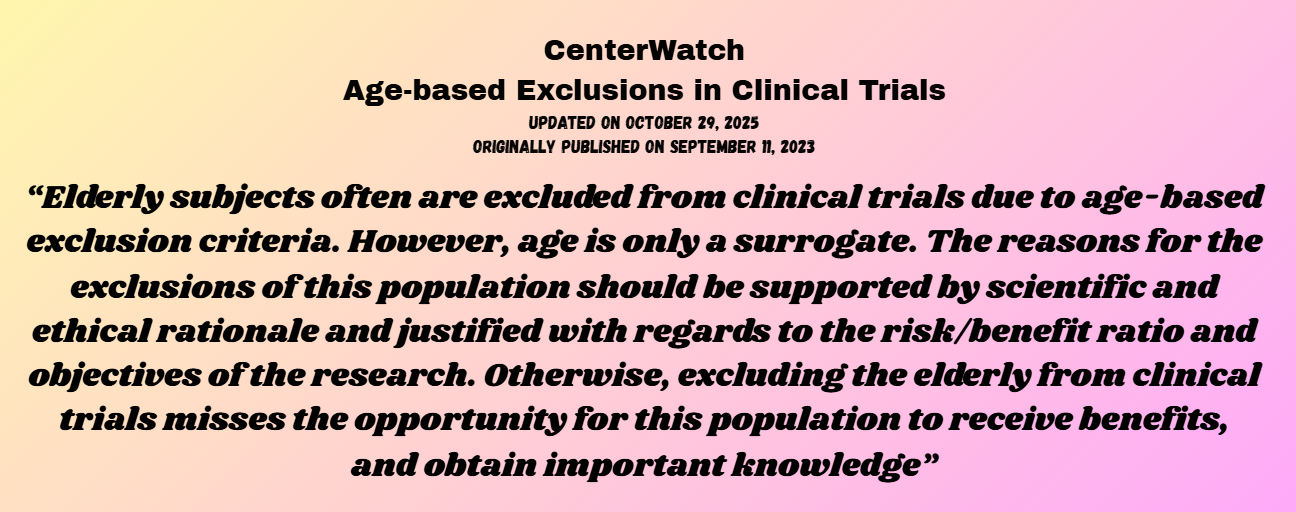
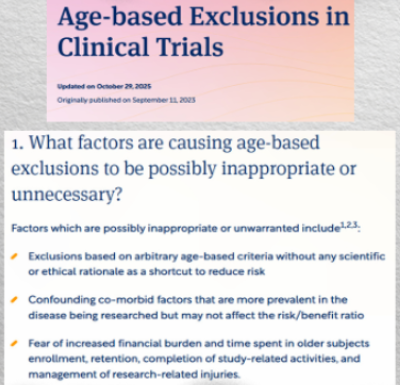
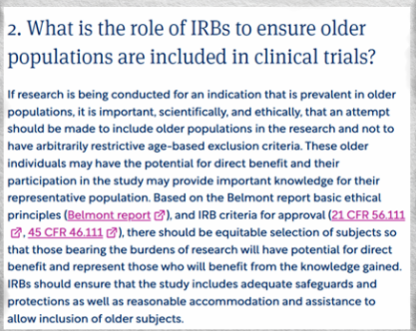
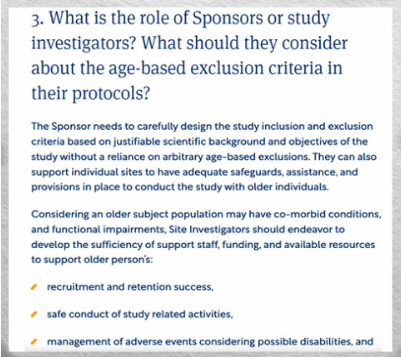
Industry Analysis: CenterWatch on “Age Based Exclusions in Clinical Trials.”
For full Center Watch analysis on age based exclusions in clinical trials -click the link below.
For information on WCG-A global clinical Research Services company- Click on the WCG/CenterWatch logo above.
While this section focuses on age, similar concerns also apply to other eligibility criteria, including sex, ethnicity, and childbearing status, which can limit participation without clear or consistent justification.
~~~IMPORTANT~~~
Scientific evidence shows that healthy older adults are physiologically different from younger adults. These age-related differences affect how the body absorbs, metabolizes, distributes and eliminates medications at different rates.
~~~~~~~~~~~~~~~~~~~~~~~~~~~~~~~~~~~~~~~~~~~~~~~~~~~~~~
How Aging Changes Drug Processing in Healthy Adults:
With aging, liver metabolism and hepatic blood flow often decline, which can change how quickly a drug is broken down and how long it remains active.
Kidney function (eGFR/creatinine clearance) also commonly declines, which is critical for drugs that are cleared through the kidneys and can raise the risk of higher exposure or accumulation even when someone is otherwise healthy.
Older adults also have predictable shifts in cardiovascular physiology.
(For example, higher systolic blood pressure and greater arterial stiffness)
Differences in body composition.
(Less total body water, more body fat, less lean muscle)
All of which can alter drug distribution, peak levels, and half-life.
In addition, older adults are more likely to be taking multiple routine medications, increasing the real-world risk of interactions between medications.
Older adults have less physiologic reserve to tolerate stressors, meaning that data from younger adults alone cannot reliably predict safety, dosing, and adverse-event patterns in older adults- particularly when the intended patient population is predominantly older.
A realistic evaluation of a drug’s effectiveness and adverse events requires that older and younger adults be represented and analyzed, with eligibility driven by health status and screening results rather than chronological age alone.